




THE NEXT THREE SEASONS IN FLORIDA THEATER
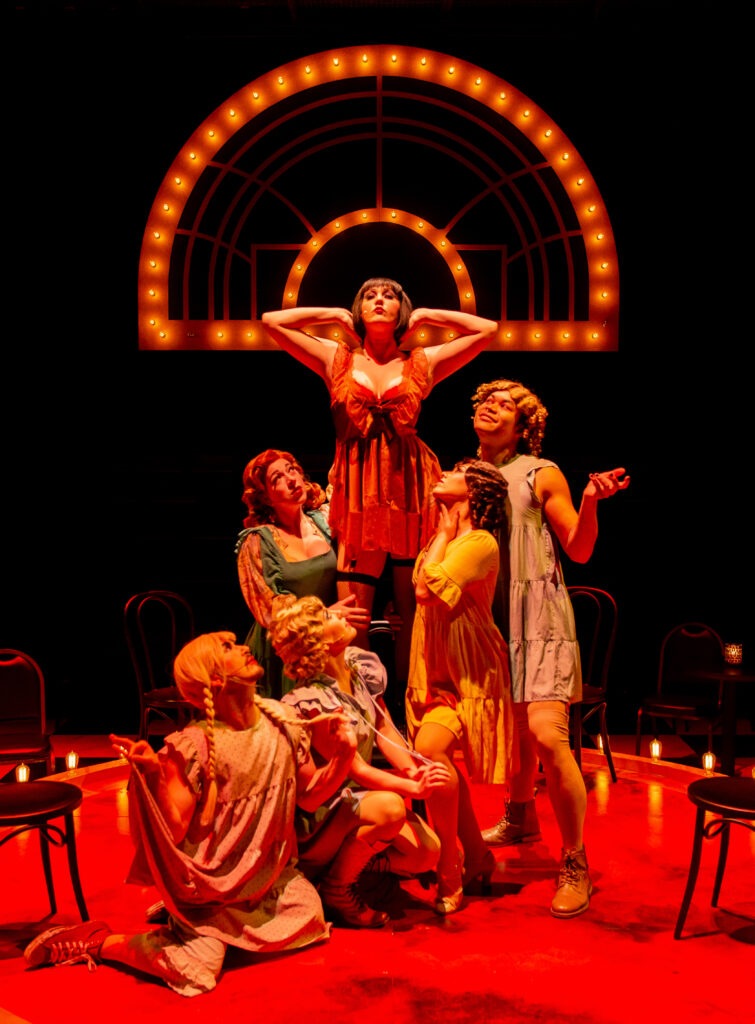
Lindsey Corey and company in Zoetic Stage’s Cabaret (Photo by Justin Namon)
By Bill Hirschman
(This is the third of an in-depth three-part series about the future facing Florida theater over the next three seasons, examining who is available to act, direct and design future productions, whether there even are enough experienced and/or talented artists in the local pool. Thhe first part examined from what you’ll see to what it will cost patrons and artists to whether it will survive at all ran on Sunday. It can be seen at https://tinyurl.com/3xhj9ckp. The second part focusing on the financial pressures endangering local theater was posted Tuesday, Jan. 6. It can be seen at floridatheateronstage.com )
CASTING ABOUT
Is Anybody There? – 1776
Actually putting bodies on the stage may be the most formidable issue. Starting just with pure numbers, interviewees disagreed whether there are plenty of actors, or a dearth of actors, or a shortfall in talented actors, or a shortage of experienced actors. And each might be correct within limits.
No one knows for certain how many people consider themselves on-stage artists in the region. One low estimate is 300 to 400 “people who have acted” in this southern region, including those not working recently. The “local” pool geographically from West Palm Beach to Key West is home to roughly 500 actors and stage managers who are Equity members, although most are not working regularly.
And some perceive that the overall pool has experienced evaporation. COVID gave artists an intermission to reevaluate the past and future opportunities in the region, whether to continue at all in the profession, aggravated by the considerable cost of living.
“We lost a lot of people because that work is not constant and typically was not that high paying,” said Caryl Fantel, Broward County Cultural Council member and Music Coordinator/Music Director for the Department of Theatre and Dance at Florida Atlantic University.
Bari Newport, producing artistic director at GableStage, went a step further: “We rehearse as if it’s a full-time job. It can become very difficult to have people who can put this into their schedule.”
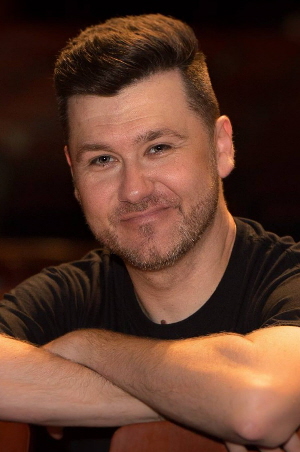
Patrick Fitzwater
Far more telling, Patrick Fitzwater, artistic director of Slow Burn Theatre Company, echoed other directors and producers making a distinction: “It’s really the talent level…. Seven of us are choosing from those same 50 actors all at the same time” for musicals.
Experience is a key virtue sought, he said as did many of his colleagues. “You populate a room with actors, not people who want to act.”
While most companies genuinely want to develop a new generation of actors, their compressed rehearsal time pressures them to cast actors with at least a certain level of experience – and even more preferring actors they have worked with before.
The efficiency of an ensemble working with colleagues is prized, said Tim Davis, producing artistic director of New City Players in Wilton Manors. “Having a group of artists that work together on a consistent basis and understand the scale of what we’re doing, the expectations of what we’re doing, and can work well with others in the room, don’t have an ego, and actually derive a lot of joy from working with each other.”
But, he assured, “I don’t think it’s malicious. I don’t think it’s personal. I think you’ve got to pay your dues,” take more classes, work at community theaters.
Conversely, even at houses like Slow Burn, the desire for large casts and the cost savings using non-Equity performers mean that playbills are increasingly filled with names of actors you likely haven’t heard of before.
“There is a lot of new talent,” said Nicole Stodard, producing artistic director of Thinking Cap Theatre. The majority of cast members in last month’s Cymbeline are “people who’ve never worked (here) before, and several young people who are making professional debuts.”
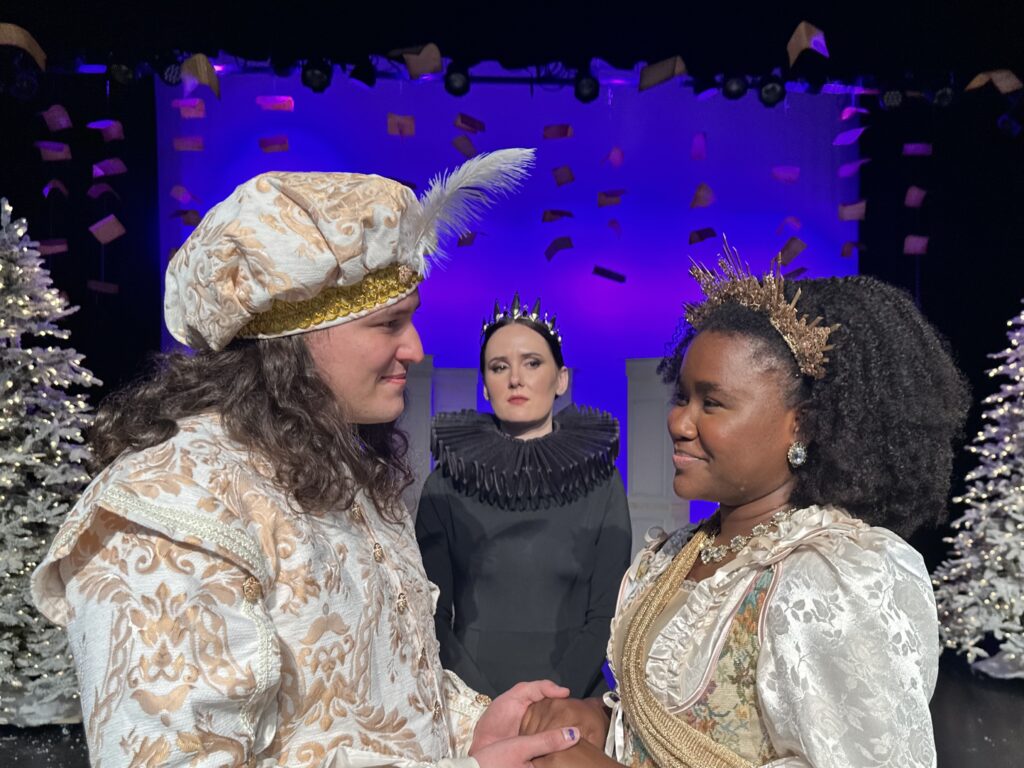
Nicole Hulett, Blaine DeBerry and Nicole Perry in Thinking Cap Theatre’s Cymbeline (Photo by Tabatha Mudra)
Fitzwater himself agreed: “Do you realize that every show that we did last year, 73 percent of each cast was brand new?”
But some names are not recognizable because they are brought in from out of town, raising another question about the size, variety and versatility of the local talent pool. More companies are holding auditions in New York City and elsewhere for select roles, a practice the Maltz Jupiter Theatre has used for years.
Andy Rogow, artistic director of Island City Stage in Wilton Manors, dislikes the practice in part due to housing expense, but occasionally “we bring in people from out of town because I don’t have the people here that can play every role. None of us” do.
Indeed, different colleagues bemoaned growing gaps in the pool. A generation of dependable middle-aged actors (and especially lead actresses) is aging into diminishing opportunities for older roles, but even so, there are a smaller number of successors.
Black actors perceive a lack of opportunities and are leaving for areas like Atlanta, veteran actress Karen Stephens said. Faithfully casting a play with predominantly Asian or Arab characters is particularly hard.

Mallory Newbrough and Robert Richards Jr. in Area Stage Company’s production of An Octoroon / (Photo courtesy of Area Stage Company)
But the entire pool is discouraged by the perception that there are insufficient opportunities to make a full-time living, plus facing some of the nation’s highest costs of living, plus the murderous traffic jams daunting cross-region commutes.
A veteran musician recalls that 20 years ago he was performing eight shows a week; now it’s 3 or 4 shows. He was making $125 per show in the 2000s; now he’s paid $145 (although he notes that some actors make only $400 for an entire week). Further, musicians used to have two weeks of rehearsal including tech and cast runs. Now there’s a first band rehearsal on a Tuesday morning, a first sitzprobe with the cast that afternoon, a rehearsal Wednesday and Thursday, and showtime Friday.
The result, he said, “I’ve learned not have any of my friends or family come to the show until the second week because the show isn’t ready for that first week opening.”
Another element is cast size itself, partly to contain the major expense of paychecks. For years, sharp companies would balance a large-cast production with one or two only requiring two to four cast members. And some epics will continue because some audiences savor them. But many companies are expecting to save money with even more superior productions of small cast titles.
For instance, the professional Theatre Lab at FAU’s Boca Raton campus has tried out smaller cast shows over the past two seasons; some the audience embraced, some shows did not enthrall a portion of them.
But Matt Stabile, producing artistic director of Theatre Lab, said budget is pressing them to seek excellence on a more careful budget with smaller casts for the upcoming season. In planning ahead, “I didn’t exclude anything that I wanted to do. But there were definitely shows that I really liked, but it’s too big for this season.”
“We’ve never had a season like this. We did our family show, which is six actors. Then we (did) a two-person show for City in the City in the City, a one-person show for Conversa, and then another two-person show for Inferna.”
GableStage opened its season with the one-man bare bones monologue Harry Clarke, but later will produce the expansive Prayer for the French Republic with 11 actors.
This is especially daunting among promising local college graduates. “If you’re just starting out, you’re going to go to New York or LA, and you should. What I think we have found, though, is that fewer people come back,” Rogow said.
The artist losses deeply disturb those who remain, like Ramirez. “For a county that prides itself on culture, now we’re cutting the artists out.”
Suzanne Clement Jones, veteran stage manager and a current leader of South Florida Equity, recalled that veteran actress “Beth (Dimon) and I had this conversation a few times that if we were going into the theater now, we would never make it. It’s just too hard to make a living in the theater right now as an actor.”
Suzanne Clement Jones
If the issues affecting casting of actors are problematic, the even more pressing hurdle is finding enough qualified lighting designers, costume designers, technical directors, master electricians, carpenters, prop masters, backstage workers, and, above all stage managers, said Clement Jones.
Part of it has to do with pay levels, but much of it is the mid-COVID consequence after all such artists were laid off.
“It wasn’t, ‘We’ll see you when we get better.’ It was ‘You’re released. You’re gone.’ Those particular positions are hard to get back when you say, ‘Oh, we’re doing fine now. Can you come back?’ Those people aren’t there anymore. They’ve got other jobs” outside of theater, Clement Jones said.
“They were already working in the side of the business that didn’t get the acclaim and ‘your name’s in the paper,’ all those little perks that make you accept the $300 a week paycheck,” Stabile said. “And frankly, they got treated poorly. They had the hardest hours. They had the most rigorous time demands…. They went, ‘Oh, can I use my carpentry skills to build houses?…’ And so they went to fields that they could have normal working hours and benefits.”
Even these positions are increasingly being filled by people imported from out of town.
FAU’s theater program “is trying to identify people early on who would make potential candidates for these positions,” Fantel said, “because we get calls all the time looking for people. I can pretty much say that our graduates are going immediately to work.”
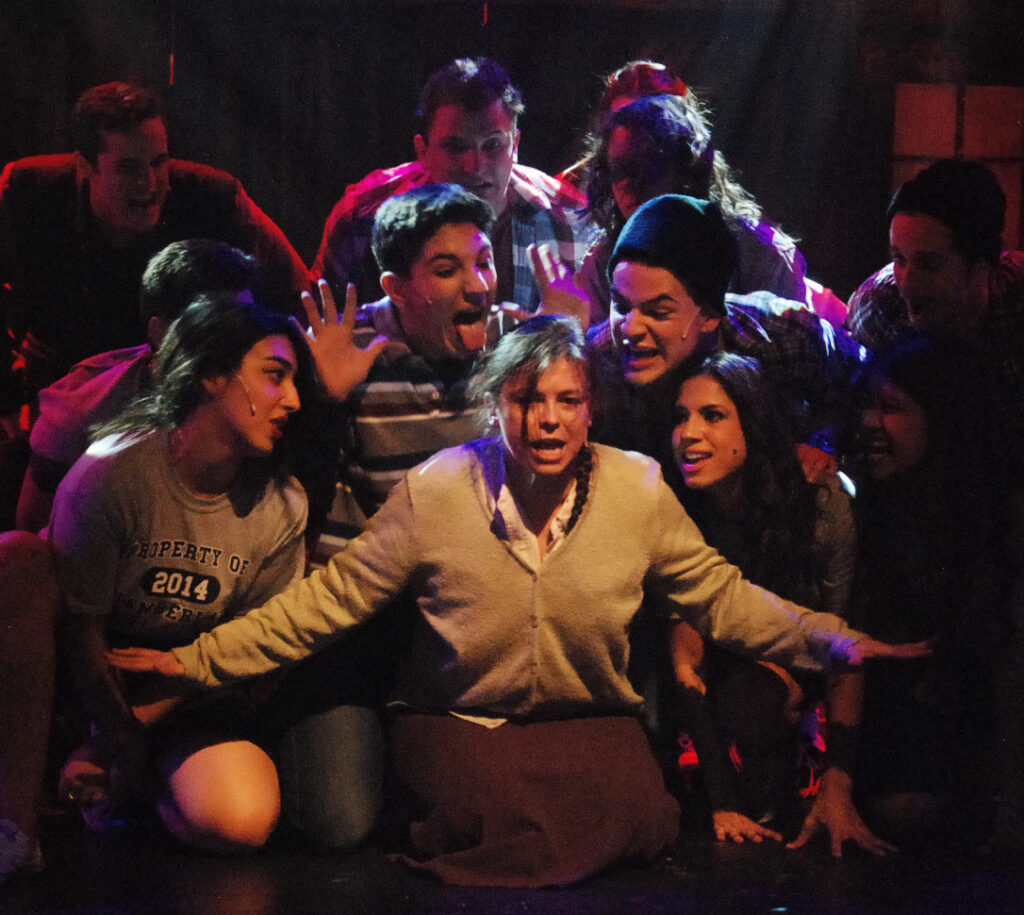
Anne Chamberlain and company in Slow Burn Theatre’s Carrie (Photo by Rick Pena)
FINALE
“I’m Still Here!” – Follies
It sounds like a mawkish sentiment from a Hallmark greeting card, but experienced residents of the theater community pugnaciously unite in the conviction that local theater will survive – not an expectation made of unsupported hope.
“I think sometimes we as an industry get so terrified that we are living through the end times of this industry, which if I’m doing my math right, I think it’s been going through since the Greeks,” Stabile said.
Clement Jones has worked here for more than three decades and she is not naïve – she saw the unshakeable pillar Florida Stage in Manalapan fold soon after moving to West Palm Beach in 2011 after nearly a quarter-century.
“Arts are living entities, right?” she said. “Things pass, things die and things come out of the ashes; the phoenix rises…. I found this true in all the lively arts: There has to be some decay, some things have to go away for something else to come forward and out of that.”
The source of that hope was expressed over and over by everyone, from the Maltz Jupiter Theatre’s Andrew Kato to Stodard to Tim Davis’ benediction:
“It’s a human experience that feeds into our need as a social animal to tell stories, to make sense of our reality through the act of telling stories. Even though there may be social anxiety or discomfort from that, we are going to crave that because it makes us feel like human beings. It’s gathering in a space and agreeing that being human has a sacredness to it. That is what will never die.”
(Please feel encouraged to comment on these pieces at muckrayk@aol.com or in the comments section on this page.)
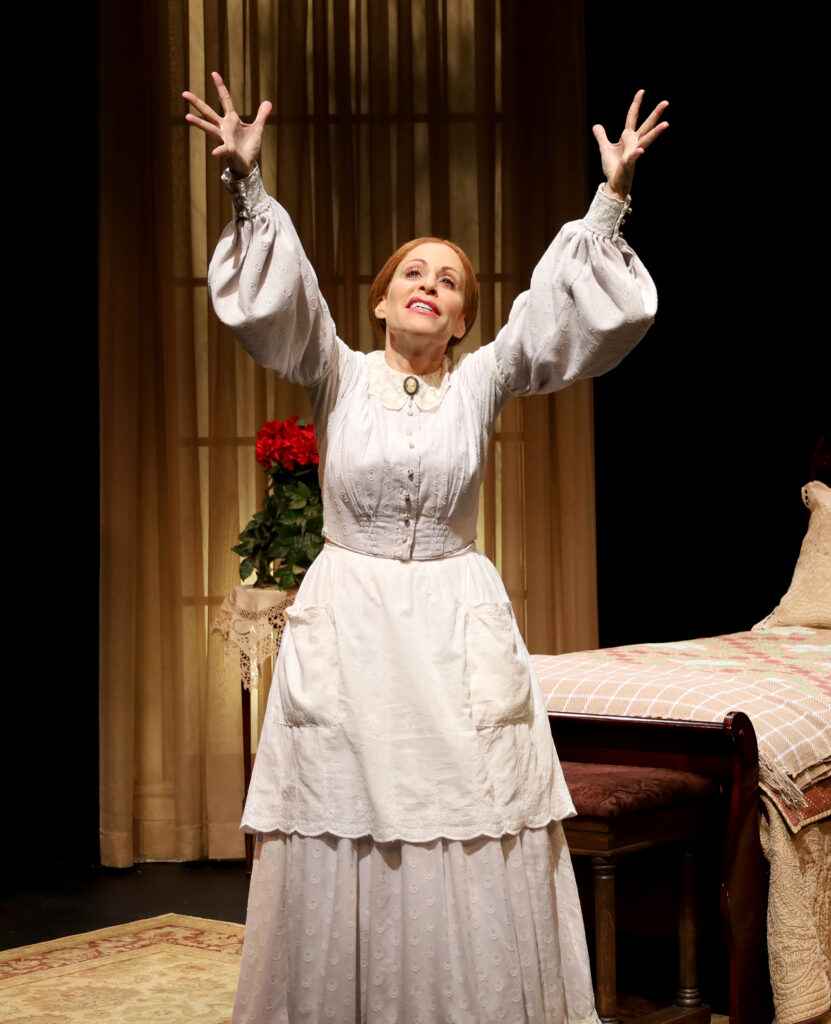
Margery Lowe in Palm Beach Dramwork’s which was thortoughly produced but presented online before being staged live later that year.





 A PaperStreet Web Design